Why one chat with many models beats many chats with one
An argument for the multi-model conversation as the default — what changes when the model picker is per-message instead of per-app.

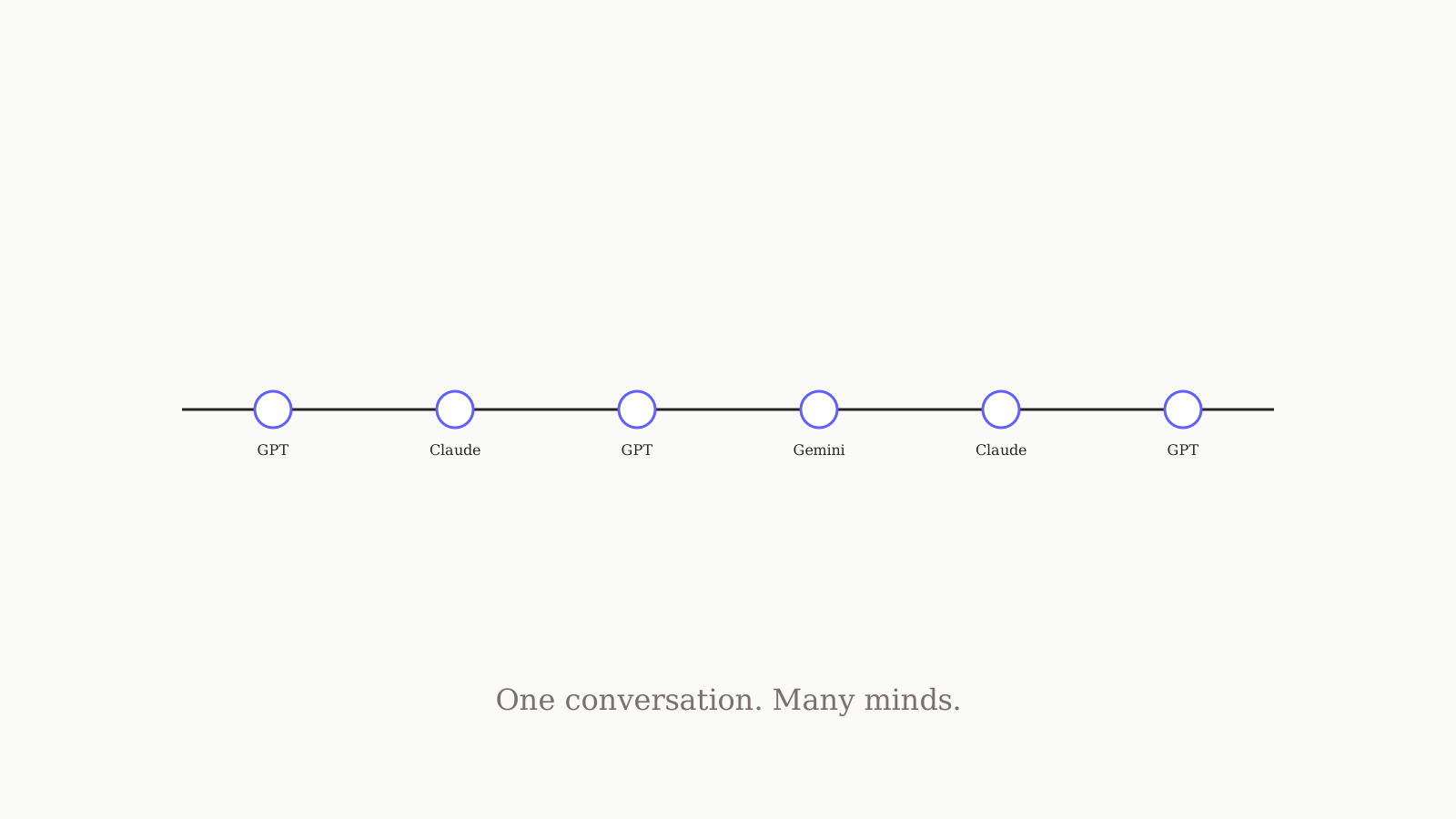
For most of AI's last two years, "use AI" has meant picking one model and committing to it for the conversation. You opened ChatGPT, or you opened Claude, and you stayed there. The mental model was: chat = product = model. This essay is the argument for a different default — one chat, many models, switching per message — and what changes when you try it. The argument has nothing to do with our product, even though our product happens to be shaped around the idea.
What "one chat, many models" means in practice
A typical multi-model conversation: you start the chat with Claude because the first turn is a long PDF analysis. Turn 3 you switch to GPT-5 because you want a marketing headline written from one of the document's findings. Turn 5 you branch and ask the same headline question to Gemini for comparison. Turn 7 you switch back to Claude to summarize the discussion so far.
Four model switches, one conversation, one set of instructions, one shared context. The model picker is a per-message dropdown, not a per-app commitment.
What changes when this is the default
You stop forming brand loyalty to a model. When the cost of trying a different model is one click, you do it. When the cost is "open a different tab, sign in, paste context, retype instructions", you don't.
You start noticing where each model is genuinely better. Claude is better at long documents and structured output. GPT-5 is better at agentic tool use and marketing copy. Gemini is better at vision-text extraction. You notice these as workflow facts, not as opinions you read on Twitter.
Conversations become less linear. Branching is the natural complement to multi-model — when the same prompt yields two different answers from two different models, you keep both. Conversations become trees, not lines.
You stop apologizing for using AI for parts of the work. When the workflow is "the right mind for the right task", AI becomes a tool the way a hammer is a tool — not a replacement for thinking, not a moral compromise. The thinking is yours, the models do the typing.
What stays the same
The thinking is still yours. Multi-model doesn't change the core practice — you decide what the work is for, you decide what stays in and what comes out, you decide which answer was right. The models just handle more of the typing.
What multi-model gives you is the freedom to not commit to a hammer just because all your hammers look alike. Some screws need a screwdriver.
The harder question
Why hasn't multi-model become the default already? Two reasons.
First: distribution. ChatGPT had a 12-month head start as a consumer product. Most "AI users" became "ChatGPT users" before alternatives were widely known. Brand loyalty followed.
Second: the multi-model tools that existed before 2025 — Poe, OpenRouter chat UI, etc. — solved part of the problem but not the workflow. Without instruction portability and branching, "many models" is just "many tabs". The tooling that makes the multi-model conversation actually feel like one conversation has only existed for the last year or so.
oran.chat is one of the tools that shipped to fix this. Others exist (see Comparisons for the landscape). What matters is the practice, not the tool.
The shift
If you've been using ChatGPT or Claude as your "AI app", try a multi-model platform for a week. Use it for tasks you'd normally do in your default app. Notice when the model switch helps and when it doesn't.
Most people who try this for a week don't go back. The exceptions are users whose work is so narrow that one model genuinely covers it — copywriters who only do short-form, or coders who only work in one language. For everyone else, multi-model is just better.
Where this fits
This is the second-most-cited piece in our Essays cluster — after the pillar, The thinking is yours, the models do the typing. For the practical playbooks that make multi-model work in practice, see Playbooks.