Is Google search dying? What the 2026 numbers say
ChatGPT hit 900M weekly users and ~17% of global queries. Google still sends 190× more traffic. A clear-eyed read of whether search is actually dying.

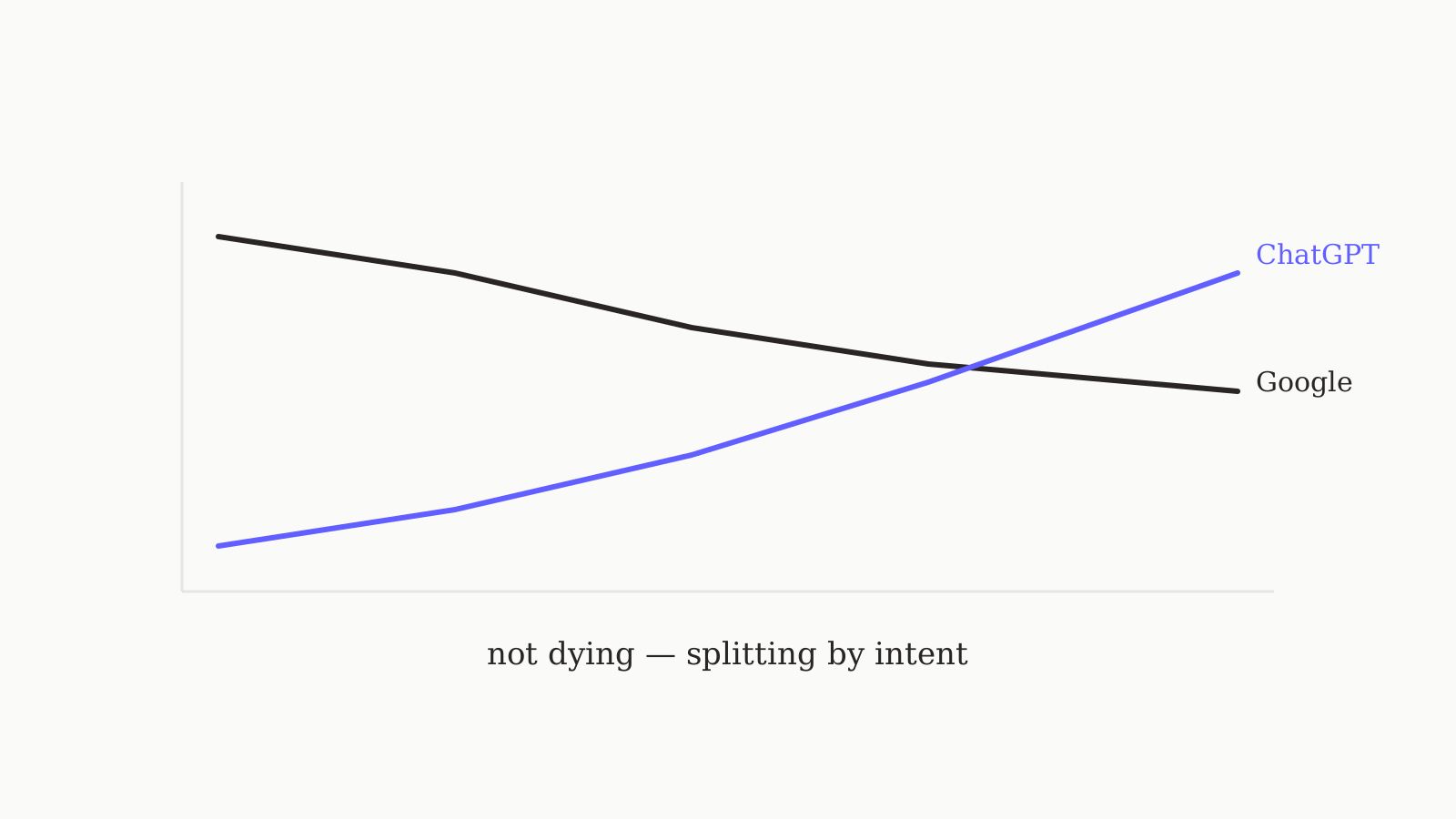
"Google is dying" is the most over-claimed headline in tech. The numbers tell a more interesting story. As of 2026, ChatGPT has roughly 900 million weekly users, processes about 2.5 billion prompts a day, and handles an estimated 17% of global digital queries. That's enormous — and Google still commands around 80% of search and sends roughly 190× more traffic to websites than ChatGPT does. So which is it? The honest answer is that search isn't dying; it's splitting. Here's the clear-eyed read.
The bull case for "search is dying"
The momentum is real. ChatGPT's growth is historically fast, Perplexity processes hundreds of millions of queries a month, and Google's own AI Overviews now answer a quarter of searches on the results page — often with no click at all. For a whole class of question — "explain this," "compare these," "summarise that" — a synthesised answer is simply better than ten links. Attention is moving.
The bear case (Google is fine)
Then there's the traffic. Google referring 190× more visits than ChatGPT isn't a rounding error; it's the difference between an experiment and an economy. SimilarWeb data even showed ChatGPT's share of generative-AI web traffic falling from about 77% to 57% in early 2026 as rivals multiplied — growth in the category, not a runaway monopoly. Google's distribution, defaults, and the sheer habit of a billion people are not dislodged by a better answer box.
What's actually happening: the query split
This is the same split I keep seeing in how people work: AI for synthesis and reasoning, traditional search for navigation, freshness, and transactions. It's why the head-to-head in Perplexity vs ChatGPT Search vs Google AI Overviews doesn't crown a single winner — they're optimised for different halves of the question.
What it means for you
If you make content, the move isn't to flee SEO — it's to extend it toward being the source AI cites, which is exactly what getting cited by AI search covers. If you just want answers, the lesson is quieter: the best results come from knowing which engine fits the question, and not defaulting to one out of habit. That's the same instinct behind the thinking is yours, the models do the typing — keep the judgment about where to look, and don't outsource it to a default.
Where this fits
Search isn't dying. It's becoming one tool among several, and the skill is choosing well between them. The same is true a level down, among the AI models themselves — no single one wins every question. oran.chat is built for that reality, routing each question to the model that answers it best instead of betting on one; start free. For more on where AI is heading, see Essays.